
Imaginary Borders
DESIGN RESEARCH
Overview
In the backdrop of a globalised world, characterised by unprecedented mobility and interconnectedness, the new age of migration demands a nuanced exploration of borders.
Beyond their conventional role as territorial boundaries, borders emerge as dynamic entities influencing the everyday lives of individuals. This study seeks to unravel borders under a new perspective and a historical legacy lens, offering insights into how they act as transformative agents and manifest under different contexts.
The physical act of crossing a border became a powerful metaphor for the resilience and adaptability required in the face of uncertain circumstances and on some level resistance to being absorbed by the system.
World precarity, exacerbated by factors such as inequality and social change, intersects with migration in multifaceted ways. It is not merely about the movement of people; it is about the underlying conditions that drive these movements and the narratives and realities drawn by them.
Methologies
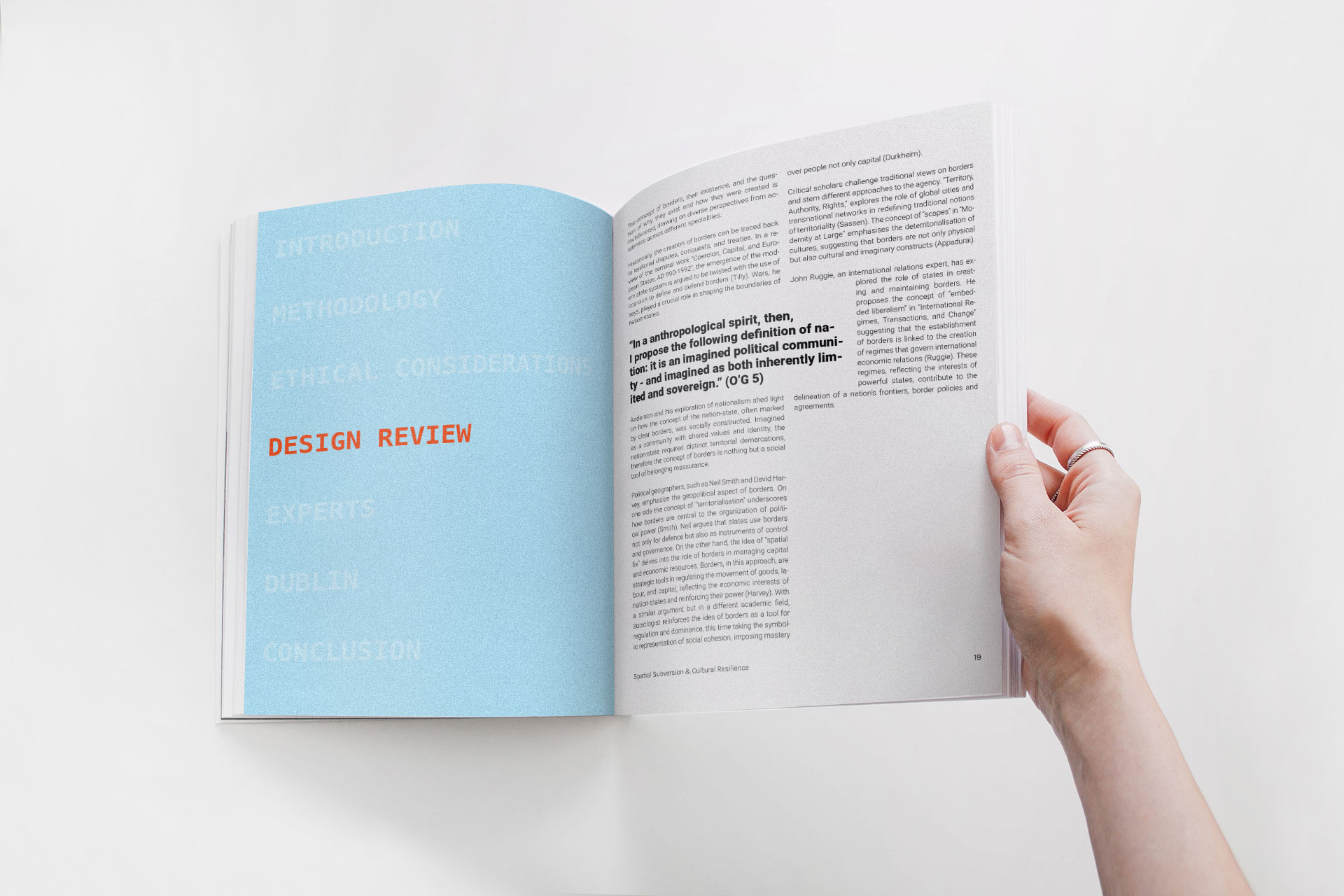
The study employs a mixed-methods approach combining qualitative research methods with speculative design and counter-mapping.
Literature Review
Exploration of existing theories, frameworks, and identify gaps in the current understanding of the subject
Grounded Theory
Generation of user-centred theories and insights directly from empirical data.
Student Survey
Expert semi-structured interviews served as a primary data collection method.
Ethnography
Through participant observation and engagement with key stakeholders.
Counter-Mapping
Acknowledging the power dynamics inherent in spatial representation.
Research
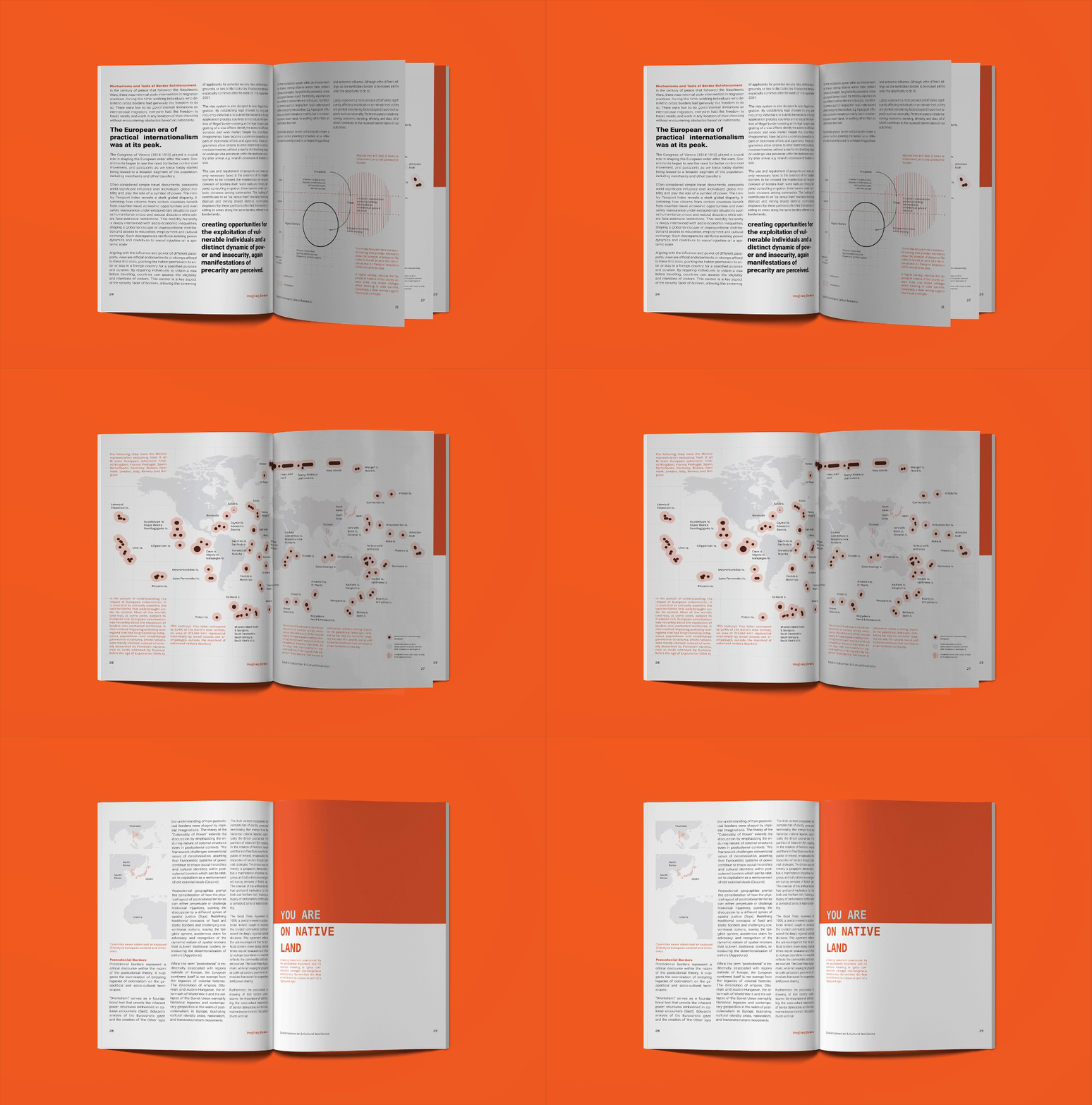
In the pursuit of understanding the impact of European colonisation, it is essential to critically examine the vast territories that were brought under its control.
Most of the world’s land was, at some point, subject to European rule. European colonisation was not solely about the expansion of borders into uncharted territories; it also involved imposing authority over regions that had long-standing indigenous populations and established governance structures.
European powers reshaped existing borders and imposed artificial (imaginary) divisions that often did not align with the historical or cultural realities of the region colonised. These borders, reminiscent of colonialism, reflect a lasting imprint on the geopolitical landscape, influencing not only territorial integrity but also the cultural, social and economic structures that continue to shape narratives to this day.
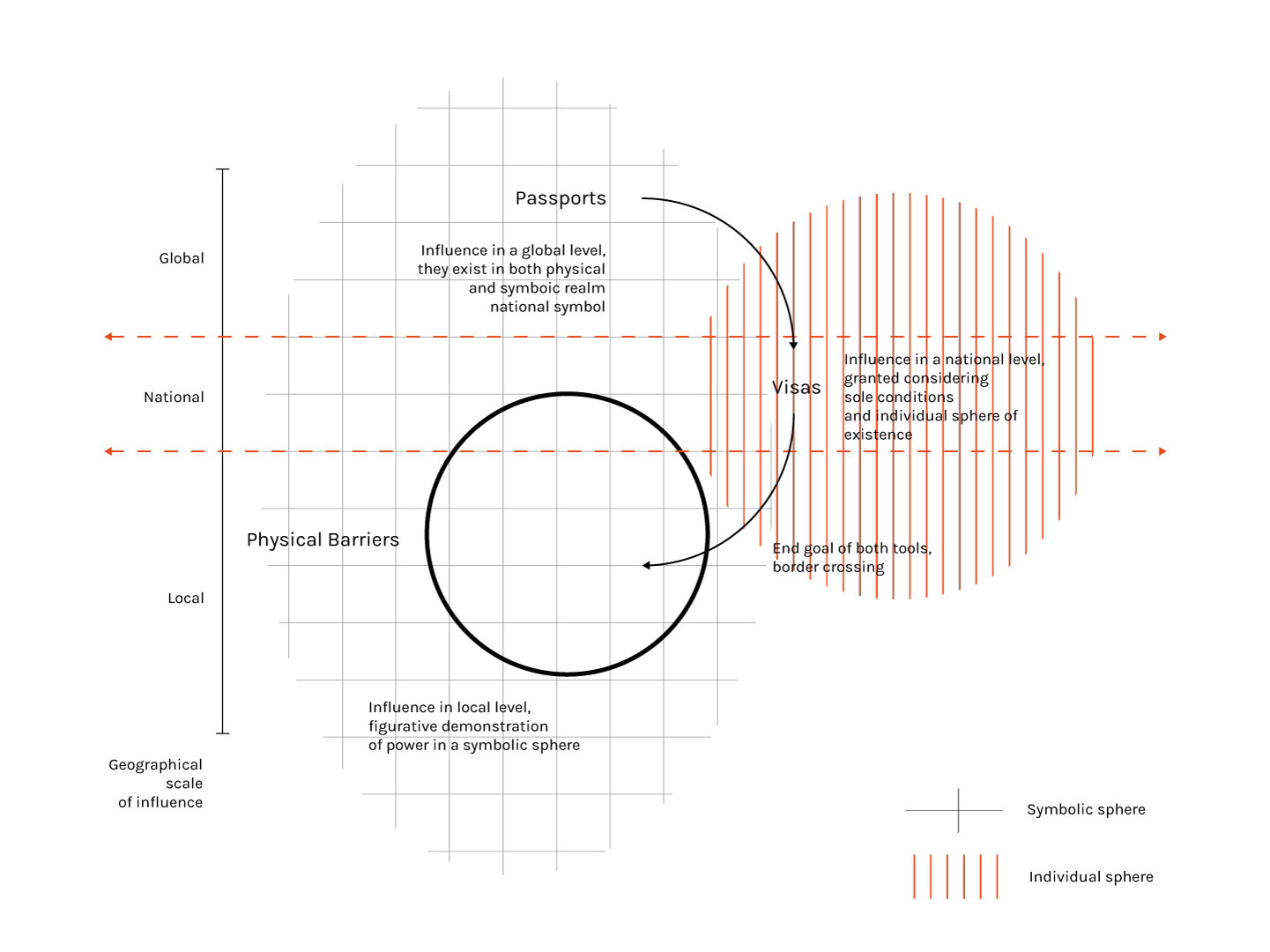
Mechanisms and Tools of Border Reinforcement In the post-Napoleonic era of European peace, there was minimal state intervention in migration, allowing individuals to move freely without national restrictions. This period, marked by practical internationalism, began to shift after the Congress of Vienna (1814-1815), which led to the introduction of passports and soon to the concept of visas and a new era of physical artificial barriers.
Together, passports, visas, and physical borders apart from impacting mobility and symbol of national sovereignty and power, also reinforce socio and economic inequalities, casting influence across local, national, and global levels.
Considering the preceding research, personal experiences, and immersive engagement within the city, an examination of the Brazilian community as a fraction of Dublin’s international band provides relevant insights into the cultural dynamics discussed in the Irish scenario and showcase a practice for exploration and mapping of Dublin’s ethnic islands.
Insights & Relevance
The EU
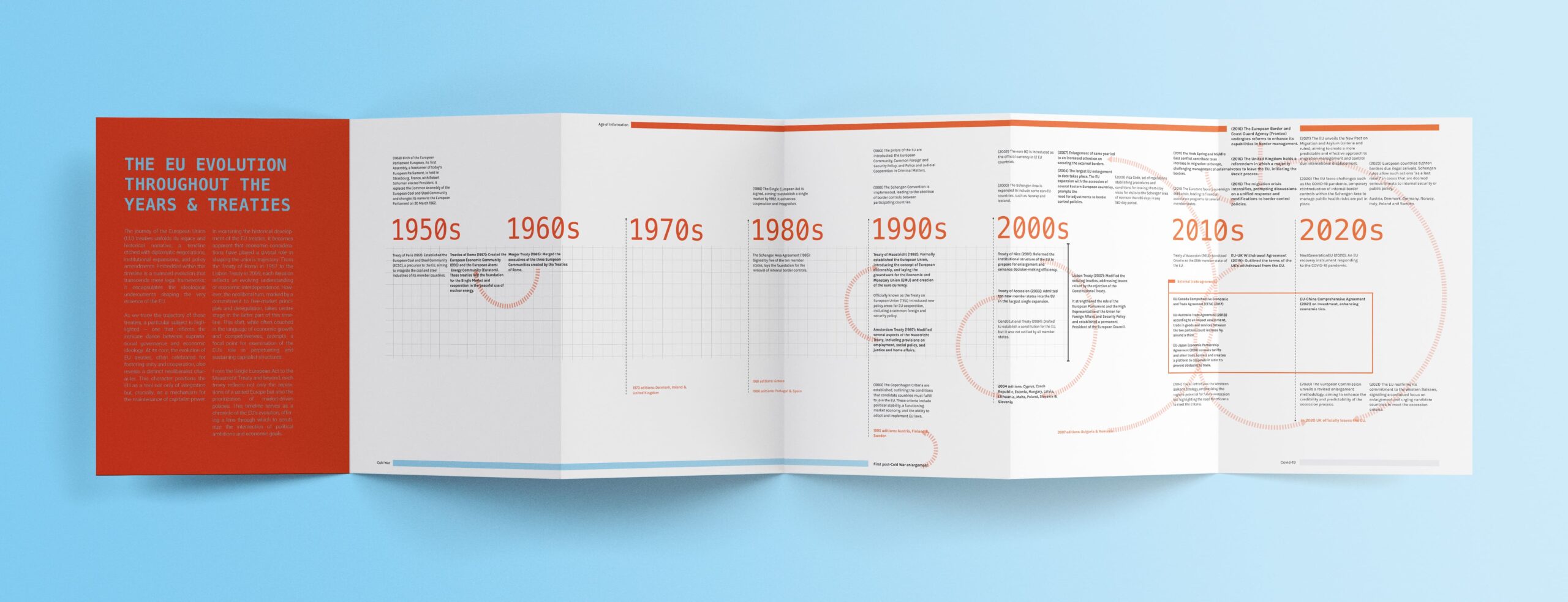
As an entity, it works as a mechanism for the maintenance of a neoliberal and capitalist system rather than a progressive cross-border cooperation initiative.
The Dublin Case
For the bad or the good, colonial legacies are directly related to the current social and urban organisation of the city.
Borders & Imaginary Borders
Both entities reflect major forces beyond just people, and as a product of colonisation and capitalism, they are all somehow imaginary when disregarding indigenous cultures and legacies.
The Flux of Capital
The flux of capital in Dublin is older than the flux of people, this justifies the urban arrangement and borders of the city attending to the private sector interests rather than its residents.
Borders transcend traditional notions of territorial boundaries. They are tied up to an intricate interplay of historical legacies, cultural nuances, and capitalist influences. Delineating not only geographical spaces but also impacting cultural identities and narratives of subversion and resilience.
Dublin, as a microcosm, mirrors challenges with social integration, resource allocation, and housing and also represents a very particular case of colonial legacy contrasting intense migratory flux.
The research advocates for a forward-thinking approach to Dublin’s urban challenges, highlighting the potential impacts of climate-induced migration and the growing presence of the far-right on the city’s social fabric.
Further research topics are raised into the intersections of social class and urban structure, focusing particularly on the dispersed ethnic islands’ role in fostering community.
Key recommendations include preparing for the anticipated influx of climate refugees, promoting inclusive urban planning, and cultivating cultural districts to mitigate marginalisation.
Access full report and support material clicking below.